Nobody likes it when somebody copies their work. Especially when the copy itself leaves out details/structures that (to the creator) is integral to the work at hand. Whenever a copy of a material is brought into question, one could immediately chalk it up to pure laziness and utter disrespect to the original source material.
However, this is not the case with each imitation. Some imitations are created in admiration towards a certain person, stemming from someone wanting to do what another has done, but doesn’t want to go through the process necessary to learn how to do it like they did; either it being due to time constraints or simply, lack of ability.
With this understanding in mind, one might group “Inspiration” into the same group with Imitation, since they both operate and exist through an “original” idea. Though both concepts seem similar at first, the difference between Inspiration and Imitation relies on the purpose of the copying action itself.
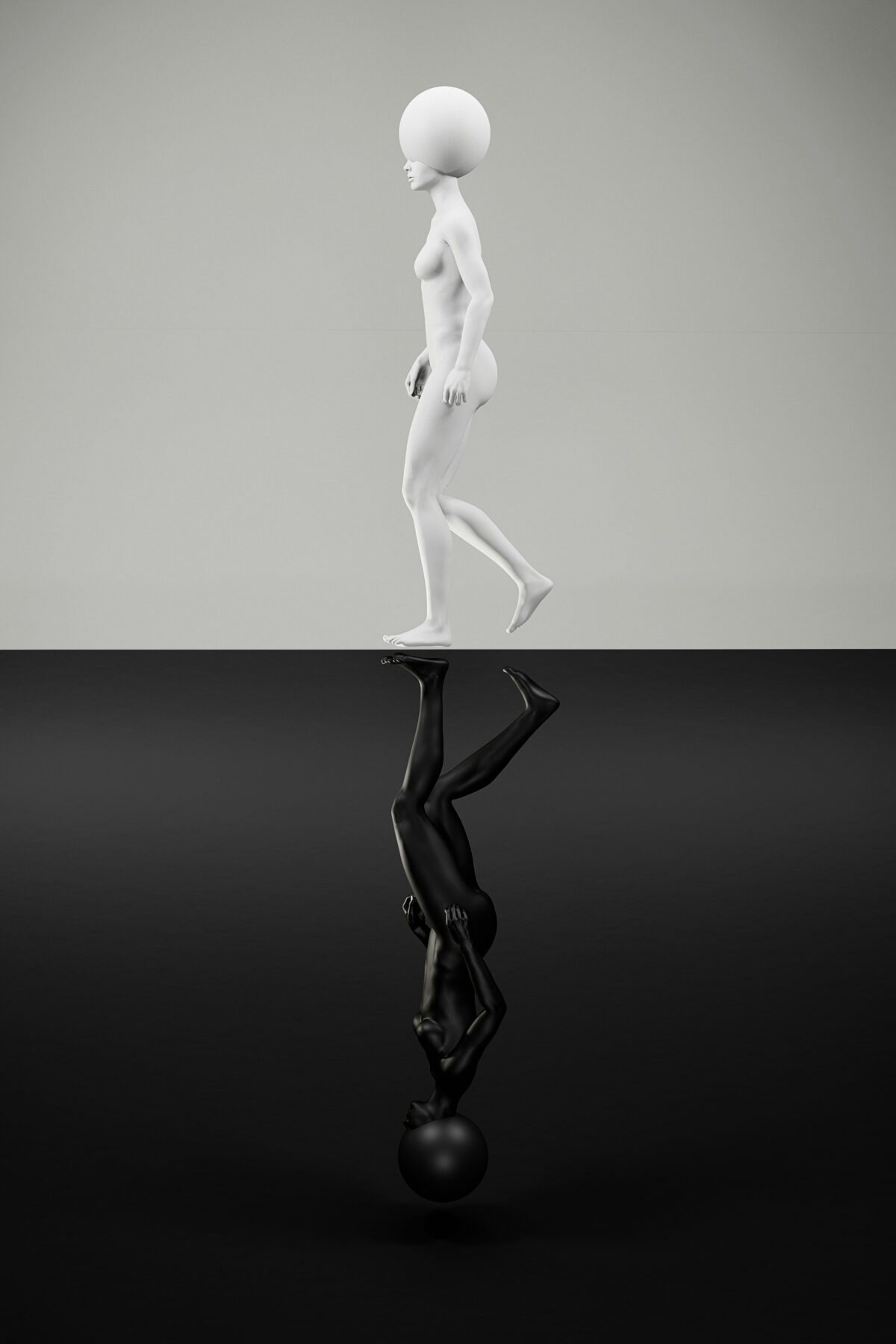
Imitation is the form of copying that takes from the original idea, without adding one’s own ideas to it.
Inspiration is the form of copying that takes portions of the original idea, but adds one’s own ideas to it, in an attempt to create something new.
Generally, most people tend to hold inspirations to a higher regard than imitations — though there are exceptions of course. Depending on the quality or status of the original idea, an imitation can be more sought after (usually financially) than inspirations; one such example being an imitation of Da Vinci’s work. If the imitation is done exceptionally well, people might pay a good price to either sell or present the artwork somewhere. This would not fare well for an inspiration of Da Vinci, since despite the work put into it, the inspiration contains other ideas, which “muddy” the main ideas of the original artwork of Da Vinci.
Of course, no matter what, the imitation in this case is just that — an imitation. Bearing some resemblances, but definitely still not the real thing. Though, some people are alright with knowing it is not the real thing, so long as it sort of looks like the real, original thing. The imitation will only be an imitation, since the purpose is to not create something new by copying, but to mimic the original idea. Without the original idea, the imitation ceases to exist.
However, when talking about the inspiration, it holds in itself more than just the original idea — sure, it will not be as complete without the original idea, but it still contains other ideas that can eventually grow into their own original ideas, like grafting a tree branch to produce fruit.
Now, it’s not to say that we should always strive for inspiration instead of imitation, since imitations can bring original ideas into brand new light again. For example, if Da Vinci’s Mona Lisa had only existed as the sole painting that sits only in the Louvre, it would not be as well-known or talked about to this day. The fact that many students, artists, scholars, and other people have made different copies, studies, projects and the like in the likeness of the painting helps popularize the original idea, making it “live” longer.
To this notion, many artists that have just started developing their technique might want to imitate a well-known piece, to then study the differences between their art and the original art, ultimately expanding their technique. From there, the artists (if they really like the original art) can create their own interpretation, obviously drawing inspiration from the Mona Lisa, which still bears resemblances of the original idea, while integrating their own ideas as well. Thus, they are able to have a much firmer grasp of the technique they developed, then are able to execute their fully original ideas now that they’ve had the practice.
Of course, not every artist’s path is the same, but to those who may feel lost in finding their own path, my recommendation is to first imitate someone who’s already made it, to then develop the best technique and style for yourself. This is only possible through constantly working on your art, no matter what it may be, since consistent training will yield results.
Though, there are others that don’t want to develop themselves; those who are constantly looking for shortcuts and ways to avoid putting in the work. These are the people that don’t develop their own technique — ultimately not growing and sticking with just making imitations, for that’s all that they feel they can do.
This line of thinking is the dangerous kind — considering it leads to stagnation, since they’re only sticking with imitations, as opposed to reaching towards developing their own ideas. This opens the door to shortcuts, in order to achieve their goals, shortcuts like AI, which is quite rampant today.
AI is the epitome of being comfortable with imitation — as that is all it can be. AI does not have the capability to create something new, rather it needs an original idea to operate out of. Without a pre-established base to work with, or a directive to follow, AI would not be able to do anything. AI is one of the biggest shortcuts to “do” something, but not having the ability to do so. Thus, it must need something to take from, and in my case, it was me.
Before I came to being a writer for my own sake, I used to work as an AI trainer for a (legally so) unnamed company. In my day-to-day work, I would supply the AI with my own writing and ideas, correcting it to amplify its “creative” output regarding writing and its delicacy. This brought me no growth and ample worry that I was rotting rather than growing, despite being paid handsomely.
That is, until they suddenly let me go, and I was no longer needed. My art no longer held any value to their training, and hence, like a weed, they’ve ripped me from their grounds. All the time working for them left me stagnant in my abilities, yet my technique was still engrained in their database.
Not to say that the people in charge were any more knowledgeable of what would help them, but this simple action of letting go of me, being juiced of my usage, was the catalyst to make me pursue what I really enjoyed, and ultimately grow as an artist, and a writer.
What didn’t really grow was the overall technique of the AI. Sure, it had a bigger arsenal of things to pick from, but like a found poem, the AI is limited to what they have in front of them, incapable of creating things of the volition of the prompt giver. Still, there is the chance that the prompt giver uses the outcome of the AI to practice their own work and potentially branch out to do their own things, which would be the most favorable/productive outcome, while looping around towards using AI for inspiration, so long as the prompt giver puts in their own original ideas into the mix.
Now, the opposite can also be true. If the prompt giver continues to use AI (in an extensive form) while claiming the ideas to be their own, then the prompt giver will be just that — a prompt giver. To claim oneself as an artist while not practicing a technique, delivering a message, or even expressing oneself in a medium where people are able to perceive it, is to lie to oneself and to others. The difference of course lies in how you use AI, at the end of the day, it is a tool developed by humans. If you use AI to scan through a document for any misspelled words, then that’s fine. If you use AI to seek inspiration on what to paint, that’s fine. One might argue that the purity could be tainted by the use of AI, but then so would be creating art digitally, or using spellcheck for your story, or using any other tool that we’ve created to make the process of creation easier. What matters is if the original idea you have for your art is either enhanced/aided by AI, or completely replaced by AI.
Ultimately, this brings us back to the notion of Inspiration vs Imitation. Should our intention of creation stem from wanting to replicate something that already exists, or wanting to create something new, relies on the purpose of creating that art in the first place. Whether it has previously been made, based on something else, or if it’s a brand new creation, it is all art — so long as it is not stolen and claimed as original.
If you would like what you read and would like to support my newfound writing journey, subscribe to me on Patreon or Ko-Fi below! I will be forever grateful!