
Have you ever pursued what you thought you wanted and regretted it later? Like buying that giant gummy bear you’ve been eyeing on the way to the grocery store, then eating it in one lonely afternoon? Did you ever feel like you should’ve just kept walking, and ignored the delicious, red gummy bear, as you fight a debilitating stomach ache?
As necessitated by most, if not all living things, our actions are dictated by our wants and our needs. Although both are important for a living thing to flourish in a contemporary human society, we seem to be motivated more by wants than needs.
This phenomenon only appears once our main needs are at least mostly fulfilled; Needs such as food, water, and shelter are bottom-line main needs, with love, belonging, self-esteem, and self-actualization being secondary needs (according to Maslow’s hierarchy of needs). Once the main needs are met, this gives way for wants and desires to take center stage in the mind. Though one may argue that arising wants could be interpreted as our personality bubbling through our psyche, what we want can be heavily influenced by outside forces, either by culture, general society, or more recently, by social media and advertisements. This is not to say our wants are not our own, but that what we think we want can depend on factors beyond our own selves.
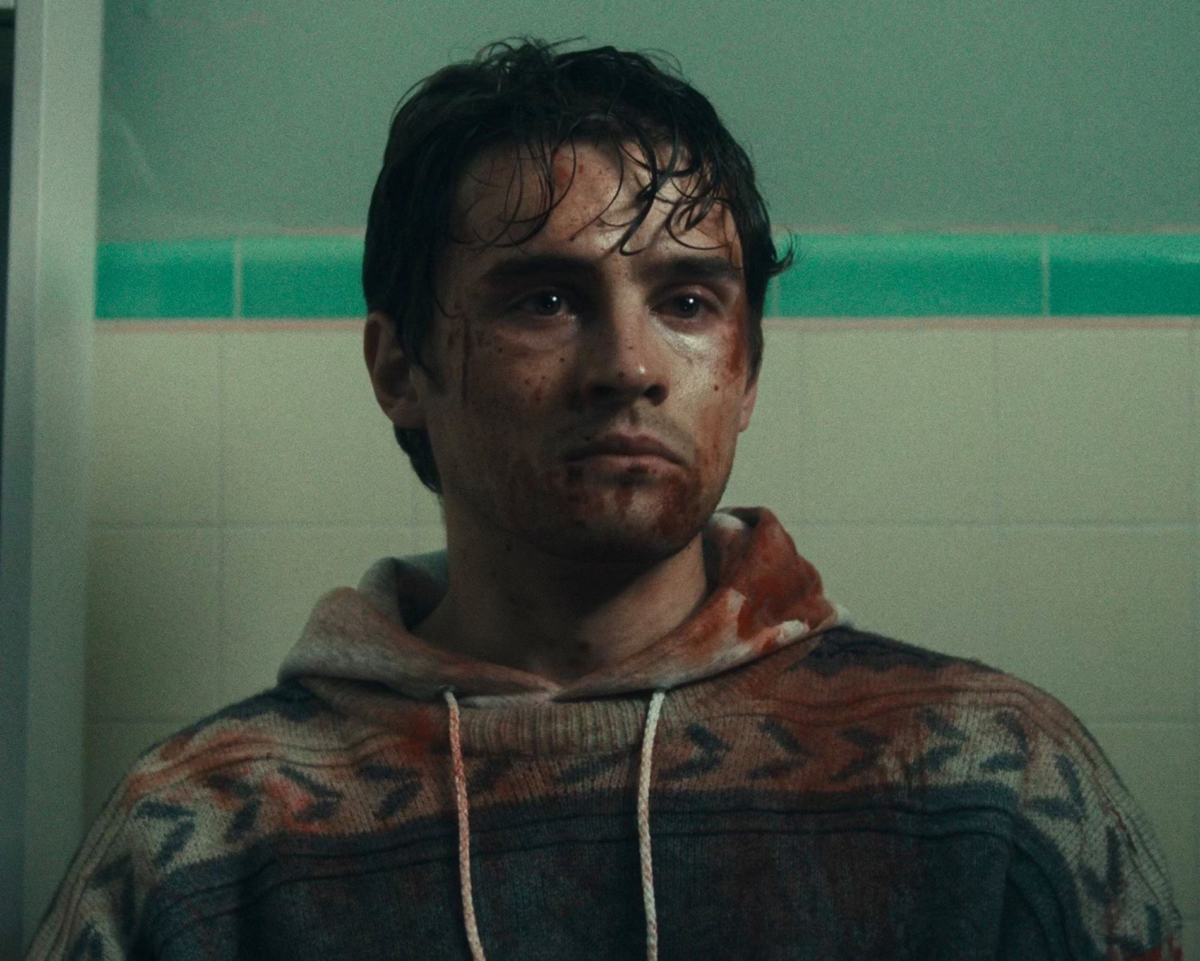
This notion of our wants not being what we think they are is demonstrated in the movie Obsession. Bear, the protagonist, exhibits his want to make Nikki his partner in the first few minutes of the film, by practicing his confession with a diner waitress. Though this want seems tame at first, after Bear comes back home to find his cat, Sandy, has passed away, he obsessively (get it?) looks at pictures of Nikki online, deepening this want to potentially dangerous levels.
So much of his early behavior is aimed at grabbing Nikki’s attention, disappointed with each missed chance of talking to her, shown in detail when they were all at Trivia Night. After failing to gain Nikki’s that night, Bear tells Sarah, another friend, about the passing of his cat, who tries comforting him, giving him a hug. Despite this, he continues pursuing Nikki’s affection, since he wants the attention and care of Nikki, not just anybody.
This intense belief of what Bear thinks he wants is what ultimately pushes him to use the One Wish Willow, wishing that Nikki would love him more than anything else in the world. This immediately goes awry, as Nikki starts acting erratically, asking Bear to take her to his house, jumping in and out of character, and ultimately staying over at Bear’s house for the first time. Nikki no longer acts like herself, with most of her qualities shown in the movie being completely altered, as if she were completely replaced with something that just wants Bear.
Despite this, Bear seems to be fine with having this version of “Nikki” who only cares about him, especially considering he doesn’t ask about stuff previously on her conscience, like her desire to leave her job, and her novel that she’d been working on. Not to mention, when “Nikki” had mentioned how she was in a rough spot due to her dad being in the hospital, Bear ignored the concerns his friends had about that claim, only asking Nikki about her dad when his friend told him to ask her about it. All aspects that were part of Nikki goes to the back burner, with Bear only worrying about things that affected him. This is further proven when he tries altering the wish later on by calling the number on the One Wish Willow package, ensuring that he can still have the Nikki that he thought he wanted, without the freaky parts that inadvertently came with his wish.
Ultimately, everything that he thought he wanted was given to him, yet he was not satisfied. This dissatisfaction (along with more evidence of him being a terrible person) is further revealed when he switches his want for attention from Nikki to Sarah, after Sarah had intentions to confess her feelings for Bear, after showing her entrance letter (and before meeting her unfortunate demise, in part caused by Bear).
At this point, one might argue that Bear is missing his need of love and belonging, especially considering how he “settles” for anybody who he perceives can be a constant source of affection, presumably also filling his need for self-esteem, considering how comfortable and happy with himself Bear seemed during his “honeymoon phase” with Nikki, before the actual results of his wish start to show up.
Yet, it is through the actions of his wants that his needs are slowly taken away, starting with his Social needs, then followed by Safety needs. Despite wants arising from the fulfillment of needs, Obsession shows that the pursuit of these wants can disrupt already met needs, which then leads us to seek to fulfill these needs again. For example, Bear wishes for Nikki to love him more than anything else, then he cannot handle the consequences of his wish (an obsessed and possessed Nikki), which makes him pursue Sarah after being invited to his car in the middle of the night. After feeling that his Social needs were now not being met (since Bear’s friends felt that he was taking advantage of Nikki), he tried supplementing that need with Sarah, completely disregarding the result of his wish, in this case the twisted want he thought he wanted fulfilled.
Bear strips away what he needs, and when he finds that he can’t get them back, he makes the decision to end his life. Not to save Nikki from the grasps of his disgusting wish, but due to his want of escaping the consequences of his actions. Actions which he then wants to back out of, because his need to survive kicks in (which is then thwarted by “Nikki’s” wish for Bear to love her the way she “loves” him).
The entire movie of Obsession showcases the danger of holding our wants over our needs, especially when it comes at the cost of other people’s autonomy or their own needs as well. Ensuring our wants aren’t based on a fleeting desire could be difficult, especially if the want itself is strong, yet it is a necessary skill to have if we are to make the best decisions for ourselves and others. If Bear’s wants had aligned with his needs, perhaps the trajectory of the story would be completely different— one with a lot less blood, death, trauma, and hopefully with at least one of them keeping a billion dollars.